Global Best Practices in Geosynthetics for Ground Engineering
Shoreline changes induced by erosion and accretion are natural processes that take place over a range of time scales. They may occur in response to smaller-scale (short-term) events, such as storms, regular wave action, tides and winds, or in response to large-scale (long-term) events such as glaciation or orogenic cycles that may significantly alter sea levels (rise/fall) and tectonic activities that cause coastal land subsidence or emergence. Hence, most coastlines are naturally dynamic, and cycles of erosion are often an important feature of their ecological character. Wind, waves and currents are natural forces that easily move the unconsolidated sand and soils in the coastal area, resulting in rapid changes in the position of the shoreline.
Excluding the impact of human activity, these processes are simply natural evolutionary phenomena. Human activities along the coast (land reclamation, port development, shrimp farming), within river catchments and watersheds (river damming and diversion) and offshore (dredging, sand mining) in combination with these natural forces often exacerbate coastal erosion in many places and jeopardize opportunities for coasts to fulfill their socio-economic and ecological roles in the long term at a reasonable societal cost.
Development within coastal areas has increased interest in erosion problems; it has led to major efforts to manage coastal erosion problems and to restore coastal capacity to accommodate short-and long-term changes induced by human activities, extreme events and sea level rise. The erosion problem becomes worse whenever the countermeasures (i.e. hard or soft structural options) applied are inappropriate, improperly designed, built, or maintained and if the effects on adjacent shores are not carefully evaluated. Often erosion is addressed locally at specific places or at regional or jurisdictional boundaries instead of at system boundaries that reflect natural processes. This anomaly is mostly attributable to insufficient knowledge of coastal processes and the protective function of coastal systems.
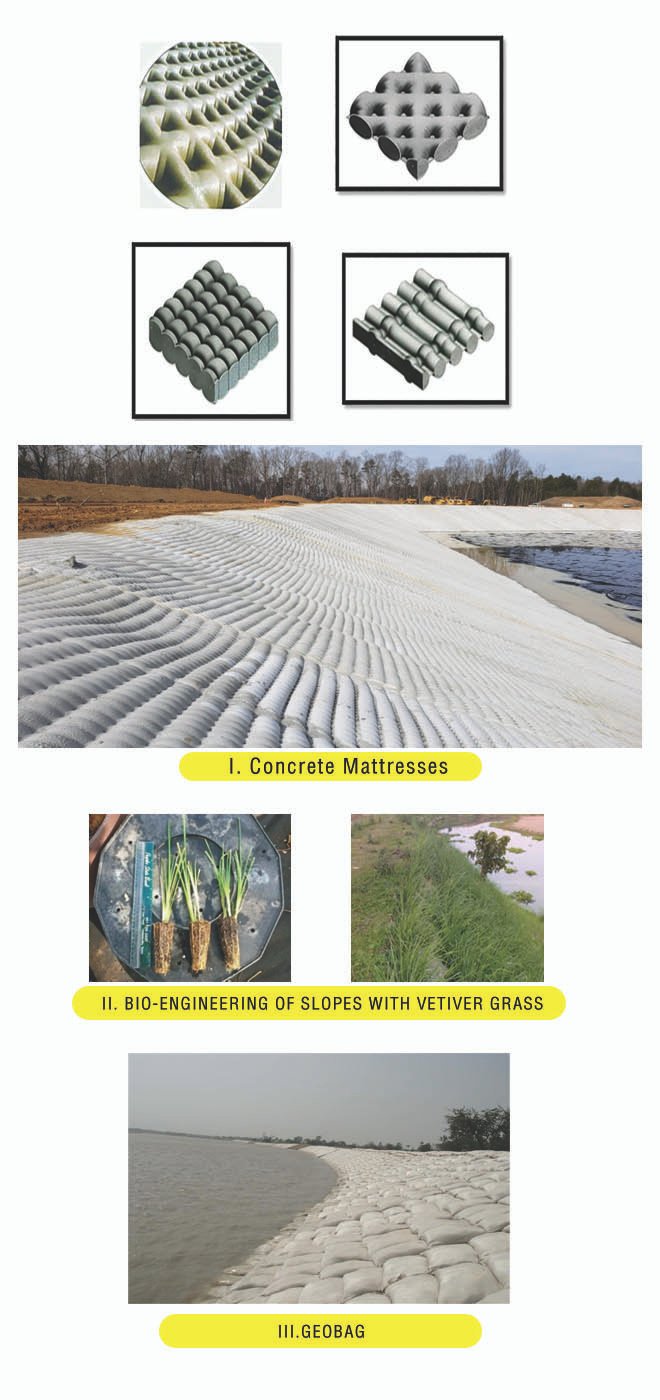
Our advanced coastal protection solutions address the challenges of shoreline erosion and marine structure stability. We provide innovative engineering approaches that combine environmental compatibility with structural reliability, ensuring long-term protection against coastal forces.